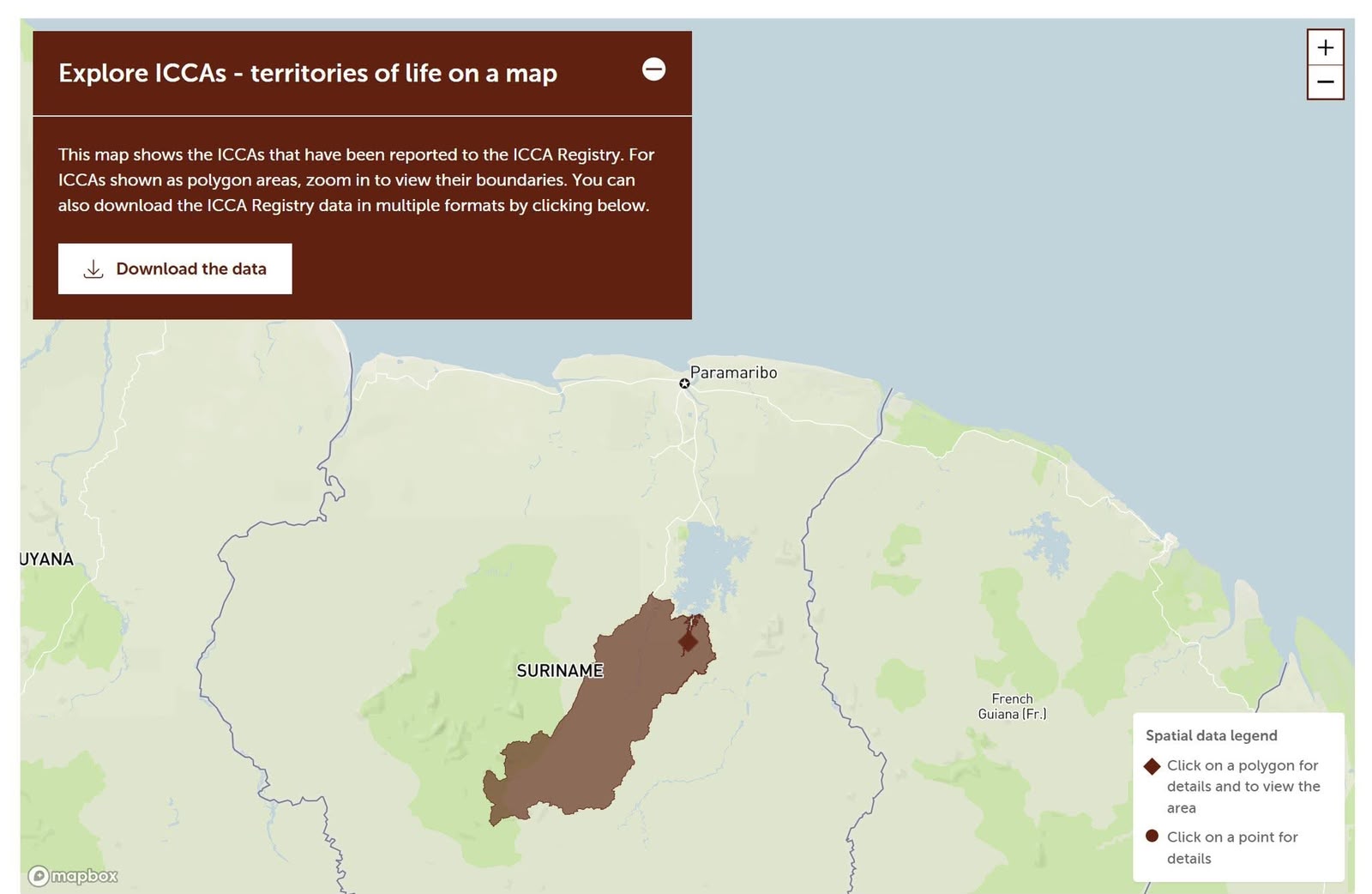
The registration of the traditional Saamaka territory in Suriname brings international attention to the special relationship between the Saamaka community, their ancestral lands and the protection of the forest.
The traditional territory of the Saamaka people in Suriname has been added to the international ICCA Registry, managed by the United Nations Environment Programme World Conservation Monitoring Centre (UNEP-WCMC). The registration, known as Saamaka Apaki: A Territory of Life, highlights the importance of traditional knowledge, community stewardship, and the protection of natural and cultural resources.
For the Saamaka community as a whole, the forest is much more than a landscape of trees. It is a source of livelihood and is closely connected to the community’s history, traditions, identity, and spirituality.
An area of great natural and cultural value
The registered area covers approximately 1.4 million hectares and consists largely of forest. For generations, the Saamaka have managed their territory using traditional knowledge, community rules, and their own governance structures.
The so-called Apaki play an important role in this tradition. These are areas of special cultural, spiritual, or ecological significance that, according to the community’s traditions, deserve protection.
Knowledge about these areas is passed down from generation to generation and is an important part of how the Saamaka relate to their natural surroundings.
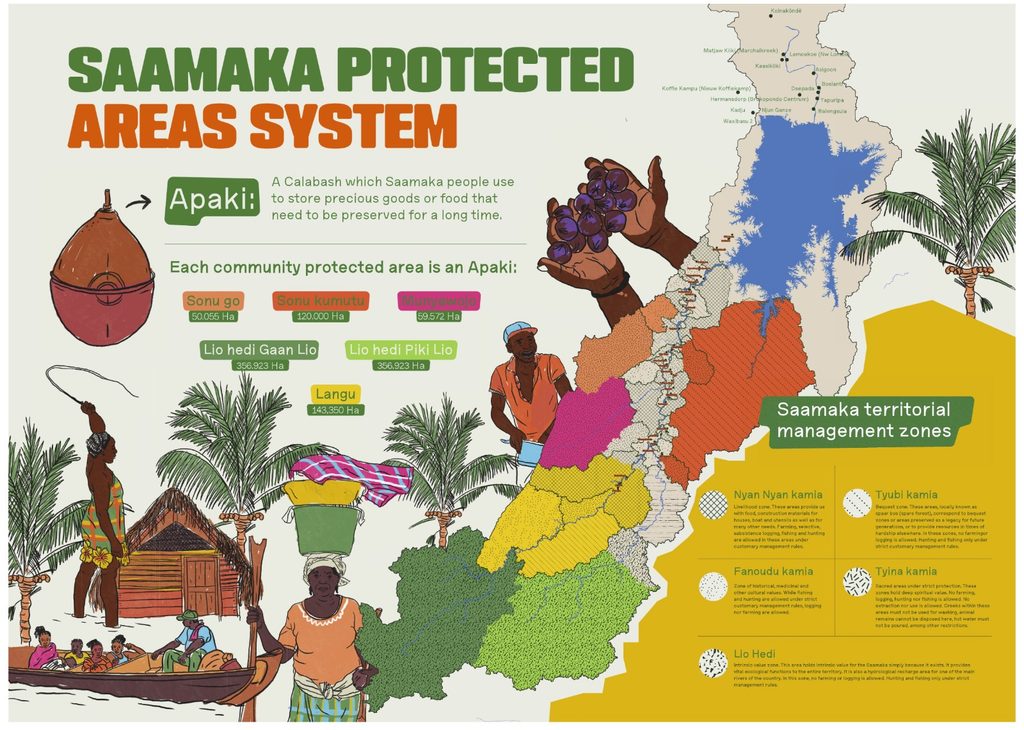
Photo: The different protected areas of the Saamaka communities—the Apaki. An apaki is a calabash that the Saamaka people used to keep valuable goods and food fresh for a long time.
What does registration in the ICCA Registry mean?
The ICCA Registry documents areas managed and protected by Indigenous and tribal communities. Internationally, these are also known as Territories of Life: places where nature conservation, culture, livelihoods, and community governance are closely connected.
The inclusion of Saamaka Apaki makes the Saamaka people’s contribution to forest and biodiversity protection more visible internationally.
The registration also provides an opportunity to share the community’s traditional knowledge and conservation practices with organizations, policymakers, and others involved in nature conservation.
However, registration does not automatically mean that the Surinamese state has legally recognized the land rights of the Saamaka people. It is an important step in the international documentation and visibility of the territory, but it does not replace formal legal recognition.
Challenges ahead
Despite its value, the Saamaka territory faces pressure from activities including commercial logging, gold mining, and road construction. The loss of traditional knowledge and declining respect for certain cultural and spiritual rules also pose challenges.
That is why it remains important to document traditional knowledge, map significant areas, and strengthen the community’s governance structures. Cooperation between the Saamaka community, civil society organizations, and the Government of Suriname can help protect the territory and develop sustainable solutions that respect the community’s rights, traditions, and needs.
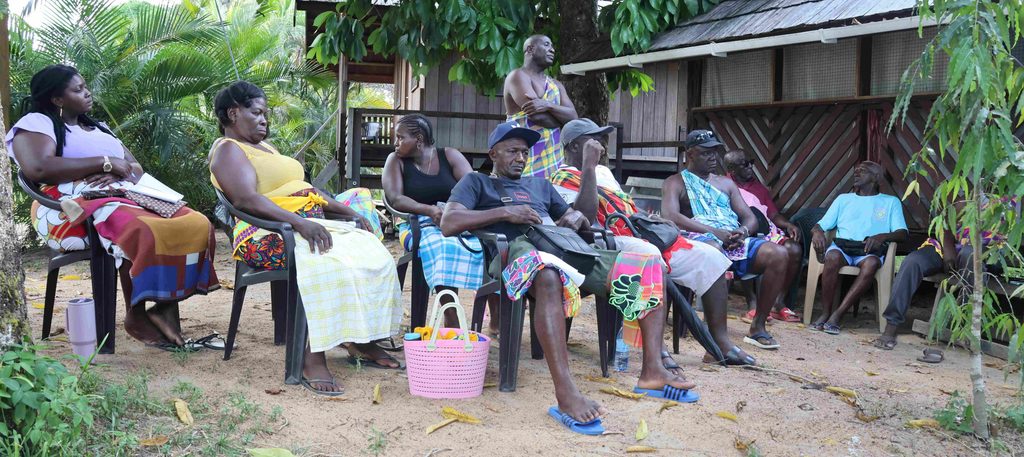
Our heritage, our responsibility
The registration of Saamaka Apaki underscores the important role traditional knowledge and community stewardship can play in protecting nature and cultural heritage. For the Saamaka, this is not only about preserving forests, but also about passing on a rich history, distinctive traditions, and a way of life to future generations.
The international visibility provided by the registration is therefore an important step. The ongoing challenge is to turn that visibility into effective protection of the territory, preservation of the culture, and recognition of the rights of the Saamaka community.
View the Saamaka Apaki listing in the international ICCA Registry:
https://www.iccaregistry.org/en/explore/suriname/saamaka-apaki