


The Association of Saamaka Communities (VSG) is participating in the 17th Conference of the Parties (COP17), taking place in Armenia from 19 to 30 October 2026. COP17 is an international conference where countries and organizations come together to discuss how to better protect nature, plants, animals, and ecosystems. The conference also focuses on addressing biodiversity loss and promoting the sustainable management of nature.

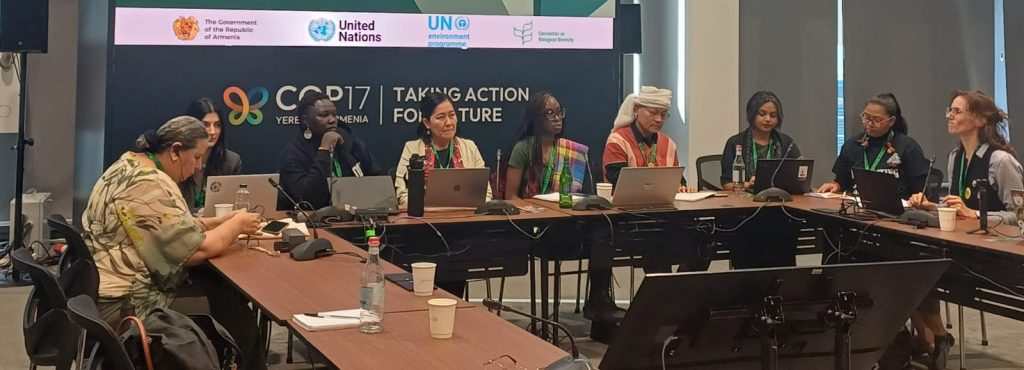
Samunda Jabini Speaks on Gender, Environment, and Community Data
During COP17, Ms. Samunda Jabini participated on behalf of VSG in a panel discussion titled “Gender and Environment Data.” During the session, representatives from various countries, including Suriname, shared their experiences in collecting data on the environment, land rights, and the role of women and young people in nature conservation.
An important topic was the value of knowledge and information collected by the Saamaka community itself. This information helps inform better policies and protect the rights of Indigenous Peoples and local communities.
The Saamaka Community as an Example
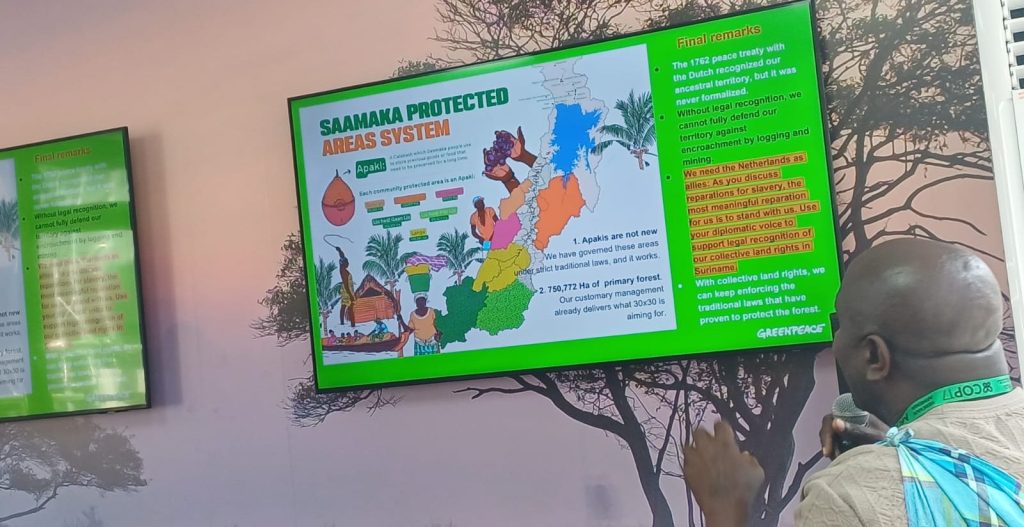
During her contribution, Samunda Jabini highlighted the situation of the Saamaka community in Suriname. The traditional territory of the Saamaka covers approximately 1.4 million hectares. The community has managed and protected this territory for around 300 years.
Jabini emphasized that traditional knowledge is an important source of information for environmental protection. This knowledge is often passed down orally and is not always recognized in official processes. Women, in particular, play a crucial role in preserving and sharing this knowledge. They possess valuable knowledge of agricultural lands, seeds, medicinal plants, and caring for nature.
Young people are also making important contributions by using technology to document this knowledge and monitor their territory. Digital maps and satellite imagery are being used to identify threats such as logging and mining.
These maps and other important data serve as evidence in legal proceedings and help challenge concessions granted without the community’s consent. Despite the 2007 ruling by the Inter-American Court of Human Rights recognizing the collective land rights of the Saamaka people, challenges remain in protecting their territory.

The Importance of Community Data
The session also addressed the need to better incorporate data from Indigenous and Tribal Peoples (ITPs) into national biodiversity reports. It is essential to protect traditional knowledge and ensure that communities retain control over how their knowledge and data are collected and used.
Ms. Samunda Jabini’s contribution underscores that data collection by Indigenous and Tribal Peoples is important not only for nature conservation but also for defending their land rights and preserving their traditional knowledge.
Through its participation, VSG contributes to the international exchange of knowledge and experiences on gender, the environment, biodiversity, and the rights of Indigenous and Tribal Peoples.
COP17 will conclude on 30 October 2026. The outcomes of the conference are expected to contribute to stronger biodiversity protection and further implementation of international agreements on nature conservation.